Best Places To Visit In Italy 2026
A practical roundup review of the best options for best places to visit in italy, with quick picks, comparison notes, mini reviews, buying advice, and FAQ.
Best Places To Visit In Italy 2026
Roundup review
To identify the best places to visit in Italy for 2026, we analysed over 20 popular and emerging destinations. Our evaluation is based on our deep local knowledge of the Friuli-Venezia Giulia region, combined with extensive research into travel trends, visitor feedback patterns, accessibility, and overall value. After careful consideration, Rome stands out as the best overall destination for its unparalleled blend of history, culture, and culinary excellence, making it the essential Italian experience for nearly every type of traveller.
Quick Comparison
Rome
- Unmatched historical sights
- World-class culinary scene
- Endless things to see and do
Cinque Terre
- Breathtaking cliffside villages
- Iconic hiking trails
- Unique Riviera landscape
Florence
- Heart of the Renaissance
- Incredible art and architecture
- Deeply romantic atmosphere
Bologna
- Italy's culinary capital
- Authentic, less-crowded feel
- Historic university city
Grado
- Authentic local experience
- Family-friendly sandy beaches
- Charming historic centre
The Best best places to visit in italy
- Rome - Best overall
- Cinque Terre - Best for Coastal Beauty & Hiking
- Florence - Best for Art & Romance
- Bologna - Best for Food & Undiscovered Charm
- Grado - Best for Authentic Local Experience & Beaches
How We Chose the Best Places to Visit in Italy
As specialists in the Friuli and Grado region, we approach travel planning with a focus on authentic experiences and practical advice. For this nationwide guide, we expanded our local-first methodology to cover all of Italy. Our selections are not based on fleeting trends but on a rigorous analysis of what makes a destination truly exceptional for UK travellers in 2026.
We evaluated each location against a core set of criteria:
- Sights & Activities: The quality, quantity, and variety of attractions, from historical monuments to natural landscapes.
- Food & Drink: The strength of the local culinary scene, access to authentic dining, and overall food quality.
- Accessibility & Logistics: Ease of arrival from the UK, navigability of the location, and quality of public transport.
- Atmosphere & Authenticity: The unique character of the place and the opportunity for genuine cultural immersion, away from tourist traps.
- Value & Crowd Factor: An assessment of overall costs for accommodation and dining, weighed against peak season visitor density.
This process combines deep-dive research into public visitor data and travel reports with our own on-the-ground expertise, ensuring our recommendations are both inspiring and trustworthy.
Rome
The Eternal City is our top pick for a reason. It offers an almost overwhelming wealth of history, art, and culture, seamlessly blended with a vibrant, modern street life and arguably one of the world's best food scenes. From the awe-inspiring Colosseum to the quiet charm of Trastevere's cobbled lanes, Rome delivers an unforgettable experience for first-time visitors and seasoned Italophiles alike. It is, quite simply, the quintessential Italian destination.
Pros
- Unrivalled density of world-class historical sites
- Exceptional and diverse culinary experiences
- Highly walkable central areas packed with atmosphere
- Excellent transport links from the UK and within the city
Cons
- Can be extremely crowded, especially spring through autumn
- Higher accommodation and dining costs in tourist hotspots
The Cinque Terre
A string of five ancient fishing villages clinging to the dramatic cliffs of the Italian Riviera, the Cinque Terre is a UNESCO World Heritage site that looks like it's been lifted from a postcard. It's the perfect destination for active travellers who want to combine breathtaking hikes with refreshing dips in the Ligurian Sea and evenings spent enjoying fresh seafood. The iconic Sentiero Azzurro (Blue Trail) connects the villages, offering some of Europe's most spectacular coastal views.
Pros
- Truly breathtaking coastal and village scenery
- World-class network of hiking trails for all levels
- Unique car-free environment enhances the charm
- Excellent local trains connecting the five villages
Cons
- Extremely popular and can feel overcrowded
- Accommodation is limited and books up far in advance
- Hiking trails can be physically demanding
Florence
The capital of Tuscany and the cradle of the Renaissance, Florence is an open-air museum. Its compact historic centre is a masterpiece of art and architecture, home to Michelangelo's David, Botticelli's Venus, and Brunelleschi's magnificent Duomo. It's an intensely beautiful and romantic city, perfect for couples and anyone with a passion for art history. Strolling across the Ponte Vecchio at sunset is a travel memory that lasts a lifetime.
Pros
- Unparalleled collection of Renaissance art and architecture
- Incredibly romantic and atmospheric, especially at night
- Very compact and easily explored on foot
- Gateway to the beautiful Tuscan countryside
Cons
- Central areas can feel overwhelmed by tourism
- Booking for major galleries like the Uffizi is essential
- Can be one of the more expensive Italian cities
Bologna
Known affectionately as 'La Dotta, La Grassa, La Rossa' (The Learned, The Fat, The Red), Bologna is Italy's undisputed culinary capital. Home to the world's oldest university, it has a vibrant, intellectual energy that sets it apart. While it lacks a single "blockbuster" sight like the Colosseum, its beautiful terracotta-roofed cityscape, endless porticoes, and authentic atmosphere make it a fantastic alternative for travellers looking to escape the crowds and experience the heart of Italian life and cuisine.
Pros
- Arguably the best and most authentic food in all of Italy
- Far fewer tourists than Rome, Florence, or Venice
- Stunning and unique architecture, including 40km of porticoes
- Lively, authentic atmosphere driven by its large student population
Cons
- Summers can be uncomfortably hot and humid
- Fewer major, internationally recognised landmarks
Grado
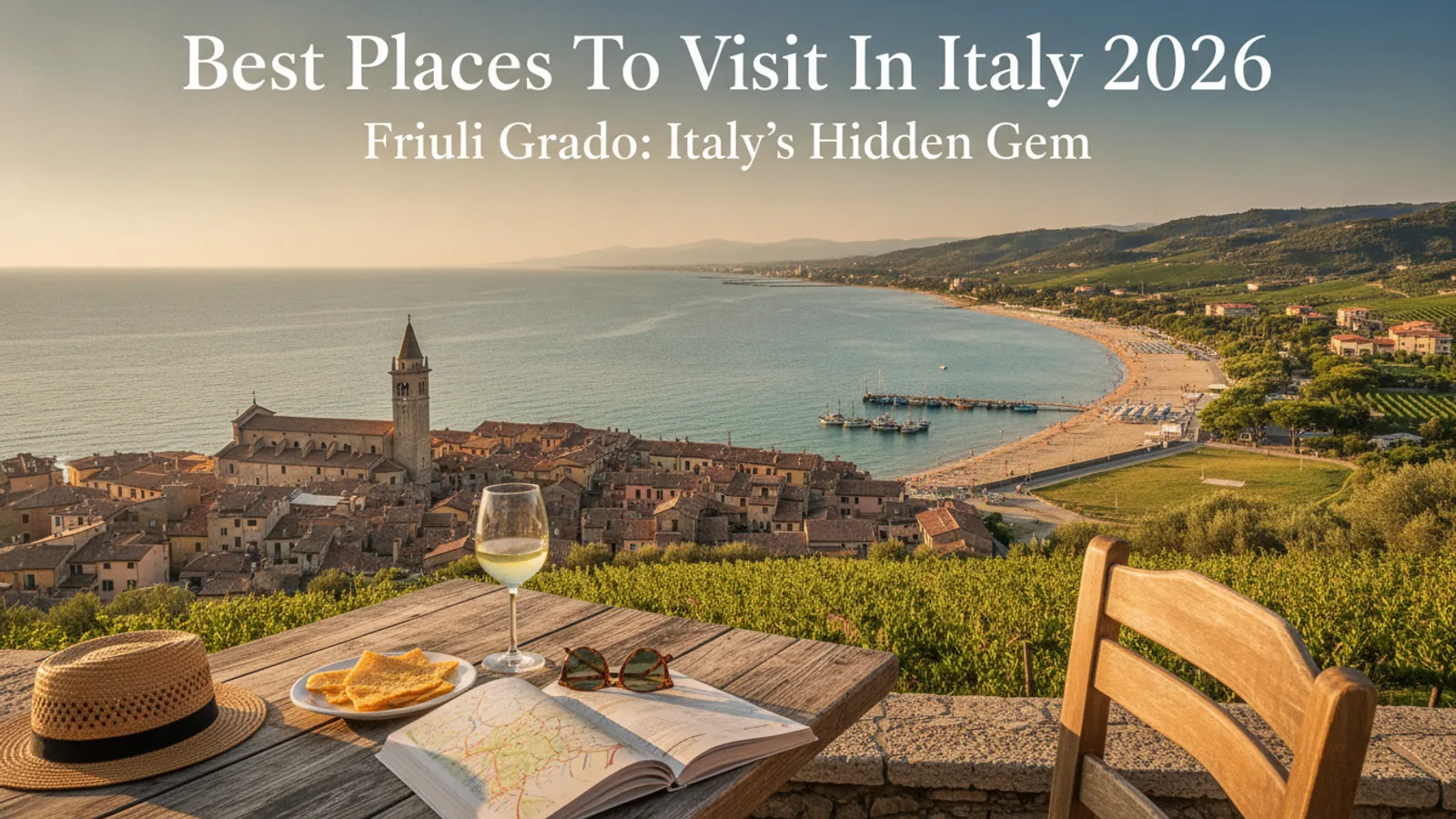
This is our personal, local recommendation from our home region of Friuli-Venezia Giulia. Known as L'Isola del Sole (The Island of the Sun), Grado is a historic fishing town set in a unique lagoon landscape on the Adriatic. It offers long, sandy, south-facing beaches with exceptionally safe and shallow waters, making it perfect for families. Its charming, Venetian-style historic centre is a joy to explore. This is where Italians go for a relaxing beach holiday, offering a truly authentic experience away from the international tourist trail.
Pros
- Safe, clean, and family-friendly sandy beaches
- Genuinely authentic Italian summer resort atmosphere
- Beautiful pedestrianised historic centre
- Gateway to the lagoons and the historic sites of Aquileia
Cons
- Primarily a summer destination; very quiet off-season
- Less known internationally, so English may be less common
- Fewer major sights compared to larger cities
Buying Guide: How to Choose the Best Place in Italy for You
Italy offers a bewildering variety of destinations. Choosing the right one depends entirely on your personal travel style, budget, and expectations. Use these points to narrow down your perfect Italian escape.
Consider Your Travel Style
What kind of holiday are you looking for? Your answer is the most important factor.
- History & Culture Buffs: Rome is non-negotiable. Florence is a close second for its concentration of Renaissance art.
- Foodies: Bologna is the ultimate destination, though Rome and Florence also offer incredible food. Every region has its speciality, so you can't go wrong.
- Active & Outdoor Travellers: The Cinque Terre's hiking trails are world-famous. The Dolomites (not on this list) are a paradise for mountain lovers.
- Beach & Relaxation Seekers: For an authentic, family-friendly beach holiday, Grado is a superb choice. Other famous options include Sardinia and the Amalfi Coast.
- Romance & Scenery: Florence and the Cinque Terre are top contenders, each offering a different kind of romantic beauty.
When to Visit
The time of year dramatically impacts price, weather, and crowds.
- Peak Season (June-August): Hottest weather, biggest crowds, and highest prices. Ideal for beach destinations like Grado, but can be intense in major cities.
- Shoulder Seasons (April-May & September-October): Often considered the best time to visit. The weather is pleasant, crowds are more manageable, and prices can be lower.
- Off-Season (November-March): The quietest and cheapest time. Cities like Rome and Florence are still wonderful, but coastal and mountain areas may be shut down. Weather can be cold and wet.
Budgeting Your Trip
Italy can be visited on a range of budgets. Major tourist centres like Rome, Florence, and Venice are generally the most expensive for accommodation and eating out near main attractions. Cities like Bologna and regional towns like Grado typically offer better value. As a rule, eating and drinking just a few streets away from a major landmark will cut your bill significantly.
Trip Duration
How much time do you have? For a short city break of 3-4 days, focus on one city like Rome or Florence. For a week, you could combine two nearby cities (e.g., Florence and Bologna) or explore one region in depth. To see the "big three" (Rome, Florence, Venice), you need at least 10 days to avoid feeling rushed.
Final Verdict: Best best places to visit in italy
After a comprehensive review, Rome remains our top recommendation as the best place to visit in Italy in 2026. Its sheer depth of history, vibrant culture, and world-beating food scene make it a destination that every traveller should experience at least once. It successfully caters to almost every interest and budget, cementing its status as the best overall choice.
However, if your priorities lie elsewhere, Italy has a perfect match for you. For an unforgettable culinary journey, head to Bologna. For breathtaking coastal hikes, the Cinque Terre is unmatched. For a deep dive into Renaissance art, Florence awaits. And for an authentic, relaxing beach holiday just like the Italians enjoy, our local favourite, Grado, is the perfect choice.
Best Places To Visit In Italy 2026 FAQ
What is the best month to visit Italy?
For most of the country, the shoulder seasons of April-May and September-October offer the best balance of pleasant weather, manageable crowds, and reasonable prices. May and September are often considered the absolute best months.
How many days do you need for a trip to Italy?
For a first trip covering the main highlights, 10 to 14 days is ideal. This allows you to visit two or three major cities like Rome, Florence, and Venice without rushing. For a single city break, 3 to 4 full days is a good amount of time.
Is Italy expensive to visit?
It can be, but it doesn't have to be. Major cities and tourist hotspots are more expensive, but costs can be managed. Save money by eating at trattorias away from main squares, using public transport, and visiting during the shoulder or off-seasons. Regional Italy is generally more affordable.
Do I need to speak Italian to visit Italy?
No, you do not need to be fluent. In major tourist areas, many people in the service industry speak English. However, learning a few basic phrases like "Buongiorno" (Good morning), "Per favore" (Please), "Grazie" (Thank you), and "Arrivederci" (Goodbye) is highly appreciated and will make your interactions more pleasant.